

The Jist: June 3 to June 16
Get the gist of recent news stories, written by journalists, that cover topics related to scholarly communication.

Hello fellow journalologists,
A few days ago I emailed you an analysis of the Emerald acquisition by Wiley. If you missed it, you can read it here:

The next issue of Journalology, the core newsletter that delves deep into recent publishing developments, will be with you next week.
The purpose of today’s edition of The Jist is to summarise how journalists have been covering scholarly communication. For once, research integrity takes a back seat. The theme running through today’s anthology is academic freedom and the politicisation of science.
There’s a lot to get through, so let’s crack on.
White House proposes vast overhaul of US science funding: what you need to know
According to the proposal, federal grants would no longer be able to be used to cover publication costs, including article-processing charges (APCs), fees that many journals charge authors to make articles freely available. The exception is for specific cases that are approved in advance by the federal agency issuing the grant.
This is at odds with an existing policy that requires all federally funded research to be made free to read as soon as it is published. “These rules would undermine the financial infrastructure to support that open-access publishing,” says Hilary Craiglow, who leads library consulting at Attain Partners, a higher-education consultancy firm in MacLean, Virginia. She notes that the federal administration has been signalling that it might roll back the open-access mandate. “But for now it is still in place, so that’s confusing.”
Nature (Dan Garisto & Mariana Lenharo)
JB: This story broke just as I was finalising the last issue of The Jist. It’s one of the most important stories of the year, not just for academic publishing but for science more broadly.
This newsletter is about journal publishing, so Trump’s ban on paying open access fees ‘won’t cut costs’, published in Times Higher Education, is worth covering here.
Rick Anderson, librarian at Brigham Young University-Provo, said the guidance failed to recognise the high-cost nature of publishing in certain disciplines, with open access fee caps likely to lead to price increases in other areas of publishing.
“Open access has always been difficult, for the simple reason that making expensive things available for free on an unlimited basis is always difficult, and the work that goes into turning research results into usable scholarly products is expensive,” said Anderson.
The latest proposals were, he continued, “another manifestation of the ongoing conflict between the desire to make high-quality content available to the public at no charge, and the fact that turning research results into high-quality content is an expensive proposition – for some disciplines, a very expensive proposition”.
Unsurprisingly, the STM statement on proposed revisions to U.S. federal funding regulations affecting publication and dissemination of federally funded research is not supportive of the proposals:
The proposal’s restrictions on publication and dissemination risk limiting the reach and impact of federally funded research and inserts political decision-making into what should be an independent system. Research is not complete at the point of discovery – it achieves value only when findings are validated, communicated, and made accessible. This is how clinicians access evidence to inform care, innovators identify new technologies, policymakers make informed decisions, and the public benefits from the research it funds. Funding for publication and subscriptions is essential to ensure research delivers public value and researchers can build on the latest discoveries and knowledge.
I can’t include all the coverage about this story, but I have to mention a recent New England Journal of Medicine editorial: The OMB and the Politicization of Science.
NEJM, which many clinical researchers would consider to be the world’s leading medical journal, publishes punchy editorials infrequently. It’s main competitor, The Lancet, a UK journal with a long history of activism is normally the journal that shouts loudly. Strong words, like these, appear rarely in NEJM:
A nonscientific, political process for determining what is scientifically sound has not worked in the past and will not work now. Lysenkoism demonstrated that allowing politics to control the scientific process can halt or even reverse a nation’s progress. Erratic funding would fundamentally undermine innovation and dramatically impair America’s ability to address today’s health challenges. The OMB proposal is currently open for public comment, and we urge our readers to express their concerns. When science becomes politicized, everyone loses.
RFK Jr under fire for ‘bullying’ letter to scientific journal
Robert F Kennedy Jr, the US health secretary, is demanding answers from a medical journal that recently removed a paper suggesting a link between vaccines and infant death, saying their decision was “of great interest to me”.
Public health advocates immediately criticized the move, and said Kennedy appeared to be trying to intimidate and influence the journal’s editorial process. The journal Toxicology Reports had removed the paper this spring after editors determined it was so seriously flawed it could harm patients and pose a risk to public health.
The letter, which Kennedy on Monday posted on X, asked the journal editor to answer several questions about how it arrived at its decision about the paper, which suggested a link between vaccines and sudden infant death syndrome, or Sids, by 25 June. Among his questions, Kennedy asked the journal to identify the experts who conducted the investigation into the paper.
The Guardian (Michelle R Smith)
JB: This political intervention is inappropriate, but let’s park that for now and focus on an editorial technicality instead. The article in question has a removal notice (rather than a retraction notice); the full text has been removed entirely from the scholarly record. Elsevier’s policy on article removal notes:
In an extremely limited number of cases, it may be necessary to remove an article or Article-in-Press from the online archive of the journal where it was published. Given the importance of maintaining the scholarly record as a permanent and – as far as possible – unaltered record of the transactions of scholarship, removal of an article is rare and will only occur where it is determined that:
The article or Article-in-Press is defamatory, or infringes others’ legal rights, and retraction is not a sufficient remedy.
The article or Article-in-Press is, or Elsevier has good reason to expect it will be, the subject of a court order.
The article or Article-in-Press, if acted upon, might pose a serious health risk.
I wanted to better understand what “extremely limited number of cases” means in practice, so I searched ScienceDirect for “Removal notice” and identified over 240 articles. The frequency appears to be increasing over time (we’re only half way through 2026, remember):
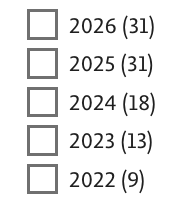
This represents a tiny percentage of the total corpus of content on ScienceDirect, of course.
I couldn’t find any mention of “removals” in the ICMJE guidance although the COPE retraction guidelines contain similar wording to Elsevier’s policy.
My understanding is that of the three reasons listed above, the two legal rationales are the ones that are invoked the most. The third, “The article or Article-in-Press, if acted upon, might pose a serious health risk” sounds sensible, but the practicalities are challenging.
On the one hand, we don’t want to give the anti-vaxxers ammunition to spread misinformation. On the other hand, it’s important for readers to be able to see the full history of a paper, not least so we can collectively learn from past mistakes.
Who decides whether a paper is a risk to public health? What are the criteria for those decisions? What’s the editorial bar for removal and who should set those standards? The Wakefield MMR paper was retracted, but not removed. It was certainly damaging to public health. Should it have been erased from history?
In an age of preprints, author-accepted manuscripts, and content ingestion by large language models, does removing a paper serve any useful purpose other than to make the editor feel better by allowing them to reverse a bad decision?
Trump: Diabetes doctors ejected from conference for handing out paper criticising US administration
Police in New Orleans forcibly removed five diabetes experts from the American Diabetes Association (ADA) annual conference for distributing an editorial published in the association’s journal. The paper criticised US President Donald Trump for dismantling and destroying biomedical research in the country.
Louisiana State Police confiscated the doctors’ conference identification and forbid them from returning to the meeting. They escorted the protesters from the event peacefully. No one was arrested.
…
Among those ejected was Steven Kahn, editor in chief of the ADA journal Diabetes Care and lead author of the editorial.
BMJ (Janice Hopkins Tanne)
JB: Why were they evicted you ask? This may have had something to do with it:
Jay Bhattacharya, director of the National Institutes of Health (NIH), was scheduled to give a keynote address at the meeting but was replaced on short notice by Richard Woychik, former director of the US National Institute of Environmental Health Sciences and now a senior adviser to Bhattacharya.
A few days later, Diabetes society apologizes after removal of Trump protesters from conference sparks outrage.
In a statement emailed to its members on Saturday, ADA said the researchers were removed from the conference because they hadn’t received prior approval to distribute materials, “not because of the viewpoints expressed in those materials.” In response, Kelly tells Science that “none of us were made aware of this policy. I doubt that any ADA member is aware of this policy.”
See how academic freedom is changing around the world
The ability to research and teach without interference from politics, wealthy donors or religious institutions produces more and better science and innovation, studies have found. Yet academic freedom around the world has been declining. According to the Academic Freedom Index, 50 of 179 countries or territories experienced a significant drop between 2015 and 2025. Only nine improved.
Scientific American (Jen Christiansen)
JB: Jen “is a senior graphics editor at Scientific American, where she art directs and produces illustrated explanatory diagrams and data visualizations.”
At the heart of the story is a graphic she produced to visualise the data from the Academic Freedom Index, which was published a few months ago.
Related to this, you may remember that back in February John P. A. Ioannidis & Jeroen Baas published a research paper entitled: Most science is published from countries lacking in democracy and freedom of press.
The current analysis shows that more than three quarters of scientific publications in 2024 came from countries without full democracy. This is a complete reversal compared with the late twentieth century. It is also a fundamental change even when compared with 2006 (the first year that Economist Democracy Index ratings started to be issued), when two thirds of publications were published from countries with full democracy.
‘Student Geng’ ignites research-integrity scandal in China after calling out senior academics
This is probably the first time in China that someone with a “grass-roots” background outside the formal academic system has gained support from state-run media after making allegations around research integrity, says Shaoxiong Brian Xu, an applied linguist at Huanggang Normal University in China who researches retractions of academic papers globally.
The fact that his accusations focused on high-profile researchers working at high-profile universities and published in high-profile journals probably helped to draw attention, Xu says. “Besides, his accusations point to data fabrication,” Xu adds. This is “one of the most serious forms of breaches of research integrity”.
Nature (Xiaoying You)
JB: The other angle worth considering here is that Nature published a news story about potentially problematic papers that it (and other Nature journals) published. This rather masochistic approach has been in place for many years: the editors of the news pages (‘front half’ of the journal) sometimes cover stories that could be embarrassing to colleagues who handle scientific manuscripts (‘back half’ of the journal). Editors working on the ‘middle half’ of the journal (the opinion section) get to sit, with popcorn, and watch.
